
10 Dollar Bill:
The 10 dollar bill is one of the most familiar pieces of paper money in the United States. It is small enough for everyday purchases but valuable enough to be useful for many different needs. People use it to buy food, pay for services, give tips, and handle other small expenses.
Although the $10 bill may look simple, it has an interesting history. Its design has changed over the years, and different versions of the note have been produced as the American banking system developed.
The current $10 bill features Alexander10 dollar bill Hamilton, one of the most important figures in early American financial history. Hamilton was not a president, but he played a major role in creating the financial system of the United States.
Older $10 bills can also interest collectors. Some historical notes may be worth more than their printed value because of their age, rarity, condition, or unusual features.
This article explains the 10 dollar bill, including its history, design, value, security features, collecting interest, and common questions.
What Is a 10 Dollar Bill?
A 10 dollar bill is a United States currency note with a face value of ten dollars.
It is commonly written as $10. The note is part of the U.S. currency system and is used for everyday transactions.
The $10 denomination sits between the $5 and $20 bills. It is often useful when someone wants to make a small purchase without using a large denomination.
ALSO READ;https://softswebz.com/old-orchard-beach-family-dollar/
For example, people may use a $10 bill 10 dollar bill to pay for a meal, buy groceries, purchase a small item, or give a cash tip.
The note is also commonly used by banks and businesses when providing change.
Who Is on the 10 Dollar Bill?
The person shown on the 10 dollar bill modern $10 bill is Alexander Hamilton.
Hamilton was one of the Founding Fathers of the United States. He served as the first Secretary of the Treasury and had a major role in developing the country’s early financial system.
He supported a strong national financial structure and helped establish important financial institutions.
Hamilton’s image has appeared on the $10 bill for many years. His connection to American finance makes the denomination particularly appropriate for his portrait.
Unlike several other 10 dollar bill common U.S. bills, the $10 note does not feature a former president on its front.
What Does the 10 Dollar Bill Look Like?
The modern $10 bill has10 dollar bill several distinctive design elements.
Alexander Hamilton’s portrait appears on the front. The note also contains the number 10 in several places and includes other text and security features.
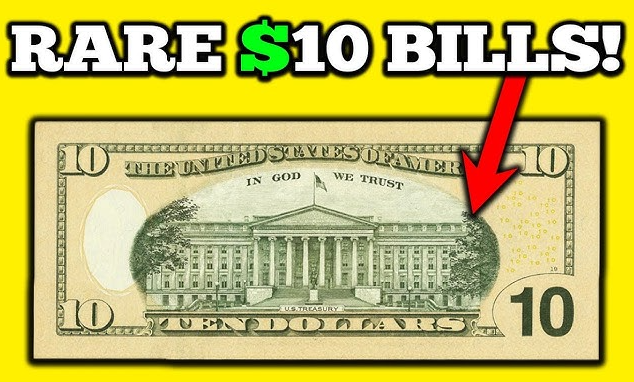
The back of the bill features an10 dollar bill image of the U.S. Treasury Building.
The overall design uses colors and patterns that help distinguish the $10 note from other denominations.
Although the basic appearance is familiar, the government has updated parts of the design over time to 10 dollar bill make the currency easier to recognize and harder to counterfeit.
History of the 10 Dollar Bill
The history of the $10 bill goes back 10 dollar bill to the early years of American paper currency.
As the United States developed its financial system, different types of paper money were created and used.
Over time, the federal government introduced standardized currency designs. The $10 denomination remained an important part of the American monetary system.
Older $10 notes can look very different from the bills people use today.
Some historical versions had different portraits, seals, signatures, colors, and design styles. Certain notes were also issued under different types of currency systems.
This long history is one reason10 dollar bill collectors are interested in old $10 bills.
Why Is Alexander Hamilton on the $10 Bill?
Alexander Hamilton is 10 dollar bill featured on the $10 bill because of his important role in American financial history.
As the first Secretary of the Treasury, Hamilton helped shape the early financial policies of the United States.
He supported a national financial system that could help the young country manage its debts and strengthen its economy.
His work had a lasting effect on American government and finance.
Putting Hamilton on a commonly used denomination recognizes his contribution to the development 10 dollar bill of the nation’s financial system.
Is the 10 Dollar Bill Still in Use?
Yes. The $10 bill is still an active denomination of U.S. currency.
People regularly use $10 notes for everyday purchases.
Unlike some older high-denomination 10 dollar bill notes, the $10 bill has not been discontinued from normal circulation.
You can commonly receive a $10 bill as change when paying with a larger amount of cash.
Banks and businesses continue to handle $10 notes as part of normal cash transactions.
Is a 10 Dollar Bill Worth More Than $10?
A modern $10 bill used for everyday 10 dollar bill spending is normally worth its face value: $10.
However, an older or unusual $10 bill may be worth more to collectors.
Collector value can depend on several factors, including:
- Age
- Rarity
- Condition
- Series
- Printing variety
- Serial number
- Historical importance
- Demand from collectors
- ALSO READ;https://softswebz.com/old-orchard-beach-family-dollar/
For example, an old $10 note that is difficult to find may sell for considerably more than $10.
This does not mean every old $10 bill is valuable. The exact type of note must be identified before 10 dollar bill estimating its collector value.
What Makes an Old 10 Dollar Bill Valuable?
Several characteristics can increase the value of an old $10 bill.
Age
Very old notes can attract collectors10 dollar bill because they provide a connection to American financial history.
However, age alone does not guarantee a high price.
Rarity
A note that was produced in small numbers or has few surviving examples may be more valuable.
Condition
Condition is extremely important.
A clean, well-preserved note with 10 dollar bill sharp details can be more desirable than a heavily worn note of the same type.
Serial Number
Some collectors look for interesting serial numbers.
Examples may include very low numbers, repeating patterns, or other unusual combinations.
Printing Errors
A genuine printing error can make a note particularly interesting to collectors.
However, it is important to distinguish 10 dollar bill a real printing error from ordinary damage.
How to Identify a 10 Dollar Bill
If you have an old $10 bill, begin 10 dollar bill by examining it carefully.
Look for the following information:
Series Year
The series information can help identify when and under which issue the note was produced.
Portrait
Check the person shown 10 dollar bill on the front.
Different historical $10 bills can feature different portraits.
Serial Number
The serial number can help identify the note and may have special collector interest.
Treasury Seal
The seal can provide additional information about the currency issue.
Signatures
Older currency may have the signatures of Treasury officials or other government representatives.
These details can help 10 dollar bill experts determine the note’s type.
How to Tell If a 10 Dollar Bill Is Real
Modern U.S. currency includes 10 dollar bill several security features designed to make counterfeiting more difficult.
When handling a $10 bill, people can look at the note carefully and use multiple security features rather than relying on a single detail.
Security elements can include specialized printing, a security thread, color-shifting features, and other design elements.
If you believe a note may be counterfeit, do not try to spend it. Instead, seek guidance from the 10 dollar bill appropriate financial or law-enforcement authority.
The Security Features of the 10 Dollar Bill
The modern $10 note includes features10 dollar bill designed to help people identify genuine currency.
These features have changed as printing technology has improved.
Some elements can be seen with the naked eye, while others are easier to examine by holding the bill at different angles or viewing it against light.
The goal is to make genuine notes easier to recognize while making reproduction more difficult.
Banks and businesses may use additional 10 dollar bill equipment to check currency.
Why Does the 10 Dollar Bill Change Over Time?
Currency designs are10 dollar bill updated for several reasons.
One major reason is security. As technology develops, counterfeiters can use better tools to reproduce printed materials.
Updating currency allows governments to introduce improved security features.
Design changes can also make notes easier to identify.
When a new version is introduced, people may notice changes in colors, patterns, portraits, symbols, or other elements.
Older $10 bills may remain valid even after a newer design enters circulation, depending on the10 dollar bill currency type and its status.
Can You Spend an Old 10 Dollar Bill?
In many cases, genuine older U.S. currency can still retain its face value.
However, not every old note10 dollar bill should automatically be spent.
If you find an old $10 bill, it may have collector value above its face value.
Before using it at a store, consider identifying it first.
A bill that looks like an ordinary $10 note could potentially be a collectible item.
Collecting 10 Dollar Bills
Collecting paper money is a hobby 10 dollar bill enjoyed by people around the world.
Some collectors focus on specific denominations, while others collect notes from particular periods or types.
The $10 denomination provides many opportunities because the United States has issued different $10 notes throughout its history.
Collectors may organize their collections by:
- Date
- Series
- Design
- Signatures
- Serial numbers
- Condition
- Currency type
A collection can begin with modern10 dollar bill notes and gradually expand into older examples.
How to Store a Valuable 10 Dollar Bill
If you believe you have 10 dollar bill a collectible $10 bill, proper storage is important.
Keep the note away from moisture, heat, food, liquids, and direct sunlight.
Do not fold it unnecessarily.
It is best to use a protective holder designed for collectible paper currency.
You should also avoid writing on the note or attempting to clean it.
Cleaning or altering an old banknote can reduce its value.
If the note is particularly 10 dollar bill valuable, consider asking a professional collector or currency expert about safe storage.
Should You Clean an Old 10 Dollar Bill?
No.
It may seem like cleaning an old banknote 10 dollar bill will make it look better, but cleaning can damage the paper.
Collectors often prefer notes that have not been chemically treated, washed, pressed, or otherwise altered.
Even if the bill looks dirty, leave it in its original condition until you have learned more about it.
Professional conservation advice may be 10 dollar bill appropriate for especially important currency.
10 Dollar Bill Serial Numbers
The serial number is one of the interesting details on a banknote.
Most people do not pay attention10 dollar bill to it, but collectors sometimes search for special patterns.
A serial number may attract attention if it is very low, has repeated digits, forms an unusual sequence, or has another notable pattern.
However, not every unusual-looking serial number is highly valuable.
Collector demand and the overall condition of the note still matter.
What Is a Star Note10 Dollar Bill?
Some U.S. currency has a star symbol in10 dollar bill place of part of the normal serial-number structure.
These are commonly called star notes.
Star notes are used when a printing problem requires a replacement note to be produced.
Because replacement notes can be less common than regular notes, some collectors are interested in them.
However, being a star note does not automatically make a $10 bill extremely valuable.
The specific issue and scarcity 10 dollar bill should be considered.
Can a 10 Dollar Bill Be Rare?
Yes, some $10 bills can10 dollar bill be rare.
The rarity of a particular note depends on its specific issue and how many examples survive.
A bill from a scarce series may be much more desirable than a common modern $10 note.
Condition can make the difference even greater.
A rare note in excellent 10 dollar bill condition may attract strong interest from collectors.
Where Can You Get a 10 Dollar Bill?
The easiest way to get a modern $10 bill is through normal banking or cash transactions.
You may receive one when withdrawing cash from a bank or when getting change after making a purchase.
Some people also request 10 dollar bill specific denominations when withdrawing money.
If you want an old or collectible $10 bill, the process is different. You may need to visit a currency dealer, collector event, auction, or other specialized source.
Why Is the 10 Dollar Bill Important?
The $10 bill is important because 10 dollar bill it is both a practical form of money and a piece of American history.
Millions of people use it without thinking about its history.
Yet every $10 note represents part of a larger financial system that has developed over many generations.
The portrait of Alexander Hamilton also gives the bill historical meaning.
For collectors, older $10 notes provide 10 dollar bill an opportunity to study changes in American currency design and printing.
Interesting Facts About the 10 Dollar Bill
The $10 bill has several10 dollar bill facts that make it interesting.
- Alexander Hamilton appears on the front.
- The U.S. Treasury Building appears on the back of the modern note.
- Hamilton was the first U.S. Secretary of the Treasury.
- The $10 bill remains in everyday circulation.
- Older $10 notes can have collector value.
- Special serial numbers can attract collectors.
- Star notes are replacement notes that may be collectible.
- U.S. currency designs have10 dollar bill changed over time to improve security.
Final Thoughts
The 10 dollar bill may be an ordinary part of everyday life, but it has a surprisingly rich history.
Modern $10 bills are widely used for everyday purchases, while older examples can be interesting to collectors. Alexander Hamilton’s portrait connects the note to the early financial history of the United States, while its security features show how currency technology has developed.
If you find an older $10 bill, do not assume10 dollar bill it is worth only $10. Check its series, condition, serial number, and other details before spending it.
At the same time, remember that age does not automatically make a banknote valuable. The exact type, rarity, condition, and demand all play important roles.
Whether you use a $10 bill to buy lunch or keep an old example as part of a collection, this small note represents10 dollar bill an important part of American currency.
FAQs
Who is on the 10 dollar bill?
Alexander Hamilton is featured on the front of the modern U.S. $10 bill. He was the first Secretary of the Treasury and an important Founding Father.
How much is a 10 dollar bill worth?
A modern $10 bill is worth $10. Older or rare examples can be worth more to collectors depending on their condition, rarity, series, and other features.
Is the 10 dollar bill still used?
Yes. The $10 bill remains a commonly used denomination in the United States.
What is on the back of the 10 dollar bill?
The back of the modern $10 bill features the U.S. Treasury Building.
Are old 10 dollar bills valuable?
Some are. Certain old $10 bills can have significant collector value, but others may be worth close to their face value.
How can I find out what my old 10 dollar bill is worth?
Identify the series, design, condition, serial number, and other features. A reputable currency dealer or professional grading service can help with an accurate assessment.
What makes a 10 dollar bill rare?
A limited number of surviving examples, a scarce series, an unusual variety, a special serial number, or a genuine printing error can make a $10 bill more collectible.
What is a star note?
A star note is a replacement note issued when a regular note needs to be replaced during the printing process. Some collectors look for star notes.
Should I clean an old 10 dollar bill?
No. Cleaning can damage the paper and may lower the collector value. It is generally better to leave an old note in its original condition.
Can I spend an old 10 dollar bill?
If it is genuine U.S. currency, it may retain its face value. However, an old note may be worth more to a collector, so identifying it before spending it can be a good idea.
Why is Alexander Hamilton on the $10 bill?
Hamilton played a major role in establishing the early financial system of the United States and served as the nation’s first Secretary of the Treasury.
Does the serial number affect the value of a 10 dollar bill?
It can. Some unusual or desirable serial numbers attract collectors. However, the serial number is only one factor in determining value.
Can a damaged 10 dollar bill still be valuable?
Yes. A rare $10 bill can still have collector value even if it has damage. However, poor condition will usually affect its market value.
Where can I sell a rare 10 dollar bill?
You can consider a reputable currency dealer, established auction, or professional collector marketplace. It is wise to research the note and compare offers before selling.
Is every old 10 dollar bill collectible?
Old notes can be collectible, but not every one is rare or highly valuable. The exact series, rarity, condition, and collector demand are important.
Why does U.S. currency have security features?
Security features help people and financial institutions identify genuine currency and make counterfeiting more difficult.
Can I collect modern 10 dollar bills?
Yes. Collectors can collect modern notes based on serial numbers, star notes, printing varieties, or personal interest. Collecting does not have to focus only on very old currency.
1 thought on “10 Dollar Bill: History, Design, Value, and Interesting Facts”