
How a Car Engine Is Manufactured:
Introduction
Have you ever wondered how a car engine is manufactured and how hundreds of metal parts become a powerful machine that moves a vehicle? A car engine is one of the most important parts of a car. It produces the power needed to move the wheels, run supporting systems, and help the vehicle perform properly.
Modern car engines are made in specialized factories using advanced machines, skilled workers, computer-controlled how a car engine is manufactured equipment, and strict quality checks. The manufacturing process begins with designing the engine and selecting suitable materials. It continues through metal casting, machining, cleaning, assembly, and testing.
Every stage is important because an engine contains many parts that must fit and work together with how a car engine is manufactured great accuracy. Even a small manufacturing error can affect performance, fuel use, reliability, or safety.
The exact process depends on the engine type and the manufacturer. A petrol engine, a diesel engine, and an electric vehicle motor are produced using different methods. This article how a car engine is manufactured focuses mainly on how traditional petrol and diesel car engines are manufactured.
In this simple guide, you will learn how a car engine is designed, how its metal parts are made, how the engine is how a car engine is manufactured assembled, and how factories test it before it is installed in a vehicle.
What Is a Car Engine How a Car Engine Is Manufactured?
A car engine is a machine that converts energy into mechanical power. In a traditional petrol or diesel car, the engine how a car engine is manufactured burns fuel inside cylinders to produce the force that moves internal parts.
These moving parts turn a crankshaft, which sends power through the transmission and eventually to the wheels.
ALSO READ;https://softswebz.com/how-to-create-3d-animation-with-ai/
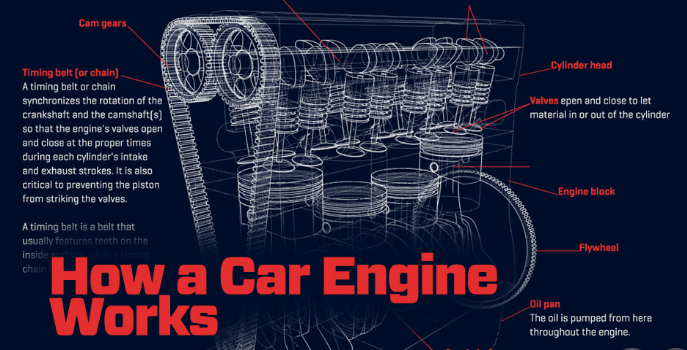
A typical internal combustion engine contains how a car engine is manufactured several important.
components:
- Engine block: The main structure that how a car engine is manufactured supports many engine parts.
- Cylinder head: Covers the cylinders and contains important passages and components.
- Pistons: Move up and down inside the cylinders.
- Connecting rods: Connect the pistons to the crankshaft.
- Crankshaft: Changes the pistons’ movement how a car engine is manufactured into rotating motion.
- Camshaft: Controls the opening and closing of the engine valves.
- Valves: Control the movement of air, fuel mixture, and exhaust gases.
- Oil pump: Circulates engine oil through the lubrication system.
- Cooling system: Helps control engine temperature.
All these components must work together how a car engine is manufactured smoothly. This is why engine manufacturing requires careful planning, accurate measurements, and detailed inspections.
Step 1: Designing the Car Engine How a Car Engine Is Manufactured
The first stage in how a car engine is manufactured is the design process.
Before a factory produces any physical parts, engineers decide what kind of engine is needed and how it should work. They consider the vehicle’s size, intended use, power requirements, fuel economy, emissions rules, cost, and expected service life.
For example, a small city car may need how a car engine is manufactured a compact engine that uses fuel efficiently. A larger vehicle may require an engine designed to produce more power or handle heavier loads.
Computer-Aided Design How a Car Engine Is Manufactured
Engineers use computer-aided design software, commonly called CAD, to create detailed digital models of the how a car engine is manufactured engine and its components.
These models show the size, shape, and position of different parts. Engineers can study how the components fit together before production begins.
They also use engineering simulations how a car engine is manufactured to study factors such as heat, pressure, vibration, and mechanical stress.
Creating and Testing Prototypes How a Car Engine Is Manufactured
Before full production, manufacturers may how a car engine is manufactured build prototype engines.
Engineers test these prototypes to identify problems and improve the design. They may adjust component shapes, cooling passages, lubrication systems, or other features.
Once the design meets the required targets, the how a car engine is manufactured manufacturer prepares production plans, tools, and inspection procedures.
Step 2: Selecting Raw Materials How a Car Engine Is Manufactured
The next stage involves selecting the materials used to make the engine.
Different parts need different material how a car engine is manufactured properties. Some components must withstand high temperatures, while others must handle heavy forces or repeated movement.
Common materials include:
Aluminum alloys: Often used for engine how a car engine is manufactured blocks and cylinder heads because they are relatively light and conduct heat well.
Cast iron: Used in some engine blocks and other components because of its strength, wear resistance, and useful casting properties.
Steel: Commonly used for crankshafts, connecting rods, and other parts that need high strength.
Special alloys: Certain engine components how a car engine is manufactured use carefully selected alloys to withstand heat, pressure, and wear.
Manufacturers select materials according to the engine design, production method, cost, and performance requirements.
ALSO READ;https://softswebz.com/how-to-create-3d-animation-with-ai/
The raw materials are inspected before use. Their chemical composition and other properties may be checked how a car engine is manufactured to ensure they meet the required specifications.
Good materials are important because the engine must operate under demanding conditions for many years.
Step 3: Making the Engine Block How a Car Engine Is Manufactured
The engine block is the main body of a how a car engine is manufactured traditional car engine. It holds the cylinders and provides mounting points for many other components.
Manufacturers commonly make engine blocks using metal casting. In this process, molten metal is poured into a specially prepared mold.
How Engine Block Casting Works How a Car Engine Is Manufactured
First, workers or automated equipment prepare how a car engine is manufactured a mold with the shape of the engine block. Special cores may be placed inside the mold to create internal spaces for coolant passages and other features.
Next, the selected metal is heated until it becomes liquid. The molten metal is then poured or injected into the mold using the appropriate casting method.
After the metal cools and becomes solid, the how a car engine is manufactured casting is removed from the mold.
The newly formed block may contain extra metal, rough surfaces, or small imperfections. These are addressed during later manufacturing stages.
Some manufacturers use aluminum casting methods, while others use different processes depending on the material and design.
Casting allows factories to produce how a car engine is manufactured complex shapes that would be difficult or expensive to make from a solid piece of metal.
Step 4: Manufacturing the Cylinder Head How a Car Engine Is Manufactured
The cylinder head is another major engine how a car engine is manufactured component. It sits above the engine block and helps form the combustion chambers.
It also contains passages and mounting areas for components such as valves, spark plugs in petrol engines, and fuel injectors.
Like the engine block, a cylinder head may how a car engine is manufactured be made through a casting process.
After casting, the cylinder head receives additional machining to create accurate surfaces and openings.
The manufacturer must ensure that the cylinder head fits correctly with the engine block. The surfaces where these parts meet must be carefully prepared to support a proper seal.
The cylinder head also needs suitable how a car engine is manufactured cooling and lubrication passages. These passages help the engine control heat and keep moving parts working properly.
Depending on the design, manufacturers may install valve seats, valve guides, and other components during later production stages.
Step 5: Machining the Engine Parts How a Car Engine Is Manufactured
Casting creates the basic shape of how a car engine is manufactured many engine parts, but it does not usually provide the final accuracy needed for assembly.
This is where machining becomes important.
Machining uses cutting tools and specialized equipment to remove small amounts of material and produce the required how a car engine is manufactured dimensions and surface finishes.
Cylinder Boring and Honing How a Car Engine Is Manufactured
The cylinders must have carefully controlled sizes and surfaces so the pistons and piston rings can work correctly.
A boring machine creates or corrects the how a car engine is manufactured cylinder’s internal diameter. Honing then improves the surface finish and creates a controlled pattern that helps support lubrication and piston-ring operation.
Drilling and Milling
Machines create openings for bolts, oil passages, coolant passages, and other features.
Milling tools also shape surfaces that need to be flat or accurately positioned.
CNC Machines
Many modern factories use computer numerical control, known as CNC, to control machining operations.
CNC machines follow programmed instructions to produce repeatable results. They can manufacture complex how a car engine is manufactured shapes with a high level of accuracy.
However, automated machining still requires correct programming, tool maintenance, inspection, and quality control.
Why Precision Matters
The engine contains parts that move at high speed and operate under heat and pressure. Incorrect dimensions can lead to excessive friction, oil leaks, poor sealing, or premature wear.
For this reason, factories measure how a car engine is manufactured important surfaces and dimensions during machining rather than waiting until the engine is completely assembled.
Step 6: Manufacturing the Crankshaft How a Car Engine Is Manufactured
The crankshaft is one of the most important moving components in an internal combustion engine.
It receives force from the pistons how a car engine is manufactured through the connecting rods and converts their up-and-down movement into rotation.
Crankshafts are commonly produced from forged steel or cast iron, depending on the engine’s design and performance requirements.
Forging or Casting
In forging, heated metal is shaped under how a car engine is manufactured high pressure. This can create a strong component suitable for demanding operating conditions.
In casting, molten metal is shaped inside a mold. This method is used for suitable designs and applications.
After the basic shape is produced, the crankshaft is machined to create its journals and other required surfaces.
The journals are the surfaces where how a car engine is manufactured bearings support the rotating crankshaft and where the connecting rods attach.
Grinding and Balancing
Grinding helps achieve the required how a car engine is manufactured dimensions and surface finish.
The crankshaft is also checked for balance. An incorrectly balanced rotating component can create unwanted vibration and place extra stress on the engine.
Factories use measuring equipment to inspect how a car engine is manufactured the crankshaft before it moves to the next production stage.
Step 7: Making Pistons and Connecting Rods How a Car Engine Is Manufactured
Pistons and connecting rods transfer the force produced during combustion to the crankshaft.
Pistons are often made from aluminum how a car engine is manufactured alloys because they are relatively light and suitable for the temperatures found in many engines.
Connecting rods may be made from forged steel, powder metal, or other materials selected for the engine’s requirements.
Manufacturing Pistons
The piston is formed using an appropriate how a car engine is manufactured production method, such as casting or forging. It is then machined to achieve its required shape and dimensions.
Grooves are created for the piston rings. These rings help seal the space between the piston and cylinder wall, control oil, and support proper engine operation.
Pistons are carefully measured because how a car engine is manufactured their fit within the cylinders is important.
Manufacturing Connecting Rods
Connecting rods are shaped and machined how a car engine is manufactured to connect the pistons to the crankshaft.
Their openings must be accurate so they can fit the relevant pins and bearings correctly.
The manufacturer also checks their dimensions and material quality.
Before assembly, pistons and how a car engine is manufactured connecting rods may be measured, sorted, and matched according to the manufacturer’s specifications.
Step 8: Manufacturing the Camshaft and Valves How a Car Engine Is Manufactured
The camshaft controls when the engine’s valves open and close.
These valves allow fresh air or an air-fuel how a car engine is manufactured mixture to enter the cylinders and let exhaust gases leave after combustion.
The camshaft contains specially shaped lobes. As it rotates, these lobes operate the valve mechanism.
Camshafts may be made through casting, forging, or other suitable manufacturing methods. Their working surfaces are machined and finished to the required specifications.
The valves are generally made from how a car engine is manufactured suitable steel alloys that can withstand repeated movement and high temperatures.
Manufacturers also prepare valve springs, guides, and seats. Each component must work with the others to provide the correct valve movement and sealing.
Some engines use a timing belt or timing chain to coordinate the crankshaft and camshaft. Others use how a car engine is manufactured different arrangements depending on the design.
Accurate timing is important because the valves must operate at the correct points in the engine cycle.
Step 9: Cleaning and Inspecting the Components
Before the engine is assembled, its parts how a car engine is manufactured must be clean and ready for installation.
Machining can leave behind metal chips, dust, and cutting fluids. Casting and other manufacturing processes can also leave unwanted material on component surfaces.
Factories use suitable cleaning methods to how a car engine is manufactured remove these contaminants.
Depending on the component and production process, cleaning may involve washing systems, specialized fluids, air systems, or other industrial methods.
After cleaning, components are inspected how a car engine is manufactured for defects and checked against the required measurements.
Common inspection methods include:
- Dimensional measurement.
- Surface inspection.
- Checks for cracks or other material defects.
- Verification of important passages and openings.
- Inspection of machined surfaces.
Some components may also undergo how a car engine is manufactured advanced inspection methods, such as pressure testing or nondestructive testing, where appropriate.
A part that does not meet the required standard may be reworked if possible or rejected.
This stage is important because small pieces of debris or hidden defects can affect the engine’s performance and service life.
Step 10: Assembling the Car Engine How a Car Engine Is Manufactured
After the individual parts have been how a car engine is manufactured manufactured and inspected, the engine moves to the assembly line.
This is where separate components are joined to create a complete engine.
Some factories use highly automated assembly systems, while others combine robots with work performed by trained technicians.
Installing the Crankshaft
The crankshaft is placed inside the engine block with the correct bearings and other required parts.
Technicians or automated systems how a car engine is manufactured apply the specified lubricants and follow the manufacturer’s assembly procedure.
Bolts are tightened according to defined torque requirements. Correct tightening helps keep components secure without damaging them.
Installing the Pistons
The pistons are connected to the connecting rods and fitted into the cylinders using appropriate tools.
The piston rings must be positioned correctly, and the how a car engine is manufactured pistons must be installed in the proper direction.
The connecting rods are then attached to the crankshaft according to the engine design.
Installing the Cylinder Head How a Car Engine Is Manufactured
The cylinder head is placed on the engine how a car engine is manufactured block with the correct gasket or sealing arrangement.
The fasteners are tightened in the required sequence and to the specified values.
This helps the joint maintain the necessary seal during engine operation.
Installing the Camshaft and Timing System
The camshaft, timing belt or chain, and related components are installed.
The timing system must be set how a car engine is manufactured correctly so that the crankshaft and camshaft remain synchronized.
Adding Other Components
The engine assembly continues with how a car engine is manufactured parts such as the oil pump, water pump where applicable, fuel system components, sensors, covers, and other required equipment.
The exact assembly order varies by engine design and factory layout.
At each stage, technicians and automated systems may record measurements, bolt-tightening data, and inspection results.
Step 11: Installing the Lubrication and Cooling Systems
An engine produces heat and contains how a car engine is manufactured many how a car engine is manufactured moving parts. It needs proper lubrication and temperature control to operate reliably.
Lubrication System
The lubrication system circulates oil through important engine areas.
Engine oil helps reduce friction, carries away some heat, and helps protect surfaces from wear.
During manufacturing, the oil pump and how a car engine is manufactured related passages are installed. The factory checks that the relevant parts are fitted correctly and that oil can circulate as intended.
Cooling System How a Car Engine Is Manufactured
The cooling system helps keep the engine within its intended operating temperature range.
Depending on the design, it includes how a car engine is manufactured coolant passages, a water pump, a thermostat, and connections to the radiator system.
The engine block and cylinder head contain passages that allow coolant to move through the engine.
Factories inspect these passages and relevant connections to help prevent leaks and ensure correct assembly.
The lubrication and cooling systems how a car engine is manufactured are essential because excessive friction or overheating can damage engine components.
Step 12: Installing the Fuel and Air Systems
The fuel and air systems supply what the how a car engine is manufactured engine needs for combustion.
The exact arrangement depends on whether the engine uses petrol or diesel.
Petrol Engines
A petrol engine typically uses an ignition system with spark plugs to ignite the compressed air-fuel mixture or fuel-air charge, depending on the engine design.
Modern petrol engines may use direct how a car engine is manufactured fuel injection or inject fuel into the intake system.
The factory installs the appropriate injectors, fuel rails, ignition components, and related parts.
Diesel Engines
A diesel engine generally compresses air to a high temperature and injects fuel into the cylinder. The fuel ignites under the conditions created by compression.
Diesel engines therefore use specialized how a car engine is manufactured fuel injection equipment designed to deliver fuel at the required pressure and timing.
Both engine types need carefully controlled air and fuel delivery to meet their performance, efficiency, and emissions targets.
Step 13: Testing the Finished Engine How a Car Engine Is Manufactured
A fully assembled engine is not ready for delivery until it passes the required checks.
Testing helps manufacturers identify assembly problems and confirm that the engine meets its specifications.
Leak Testing
ALSO READ;https://softswebz.com/how-to-create-3d-animation-with-ai/
Factories may check the engine or its how a car engine is manufactured systems for oil, coolant, fuel, or air leaks, depending on the design and test procedure.
Some passages and components are pressure-tested to verify that they meet the required standards.
Performance Testing
Some engines are tested on a dynamometer. This equipment measures factors such as torque and power under how a car engine is manufactured controlled conditions.
Testing can also help engineers evaluate engine behavior at different operating speeds and loads.
Electronic Checks
Modern engines include sensors and electronic control systems. Factories may check electrical how a car engine is manufactured connections, sensor signals, and electronic functions using diagnostic equipment.
Noise and Vibration Checks
Unusual sounds or vibration can indicate a problem with assembly, balance, or a component.
Factories use appropriate checks to how a car engine is manufactured identify issues before the engine leaves production.
Not every engine receives exactly the same test sequence. Some manufacturers perform extensive running tests, while others use a combination of automated checks and sample testing how a car engine is manufactured according to their production and quality requirements.
Step 14: Final Quality Control How a Car Engine Is Manufactured
Once the engine passes the required tests, it goes how a car engine is manufactured through final quality checks.
Inspectors verify that the correct parts have been installed and that required records are complete.
They may check identification numbers, labels, external connections, fasteners, and other details.
Manufacturers also use quality-control data how a car engine is manufactured to identify repeated problems and improve their production processes.
If an engine fails a test, it may be sent for further inspection, repair, and retesting. Engines that cannot meet the required specifications should not be approved for normal delivery.
Quality control is not limited to the final stage. It takes place throughout manufacturing, from incoming materials how a car engine is manufactured to machining and assembly.
Step 15: Installing the Engine in the Car
After approval, the engine how a car engine is manufactured is prepared for transport to the vehicle assembly line or another manufacturing facility.
Depending on the factory layout, some parts may already be attached to the engine before it reaches the vehicle.
The engine is positioned in the car and connected to the transmission, mounting points, cooling system, fuel system, exhaust system, and electrical connections.
Technicians or robots secure the how a car engine is manufactured engine and connect the relevant components.
The vehicle then continues through the remaining assembly stages.
After the car is assembled, the manufacturer performs additional vehicle-level checks. These may include checking fluid systems, electronic functions, leaks, and overall operation.
The completed car must pass the required how a car engine is manufactured inspections before it is approved for delivery.
How Long Does It Take to Manufacture a Car Engine?
The time required to manufacture an engine depends on the engine design, factory equipment, production how a car engine is manufactured volume, and manufacturing process.
A large automotive factory may produce many engines every day using automated production lines. Individual how a car engine is manufactured operations such as casting, machining, and assembly can happen in parallel, so the total factory process does not simply equal the sum of the time taken for each step.
A prototype engine may require much more time because engineers must build, test, and improve its design.
A standard production engine can move how a car engine is manufactured through an organized factory process much faster once the design, tooling, and production systems are established.
There is no single manufacturing time that applies to every engine.
How Technology Is Changing Engine Manufacturing in 2026
Modern factories use advanced how a car engine is manufactured technologies to improve accuracy, productivity, and quality.
Robotics and Automation
Robots can handle heavy components, repeat assembly operations, and perform certain tasks with consistent movement.
Automation can also reduce the need for how a car engine is manufactured workers to perform repetitive or physically demanding tasks.
Artificial Intelligence
Some factories use AI-supported systems to analyze production data, identify unusual patterns, and help predict when equipment may need maintenance.
AI can support inspection and planning, but how a car engine is manufactured the results still need suitable validation and human oversight.
Digital Monitoring
Sensors can monitor machine conditions, temperatures, vibration, and other production information.
Manufacturers use these data to detect how a car engine is manufactured problems and improve factory performance.
Advanced Manufacturing Materials How a Car Engine Is Manufactured
Engine makers continue to study materials and production methods that balance strength, heat resistance, durability, cost, and weight.
The exact technologies used vary how a car engine is manufactured between manufacturers and facilities.
Even with advanced automation, good engineering, skilled workers, and careful quality control remain essential.
Difference Between Manufacturing a Petrol Engine and an Electric Motor
Although both can power a car, a petrol engine and an electric motor are manufactured differently.
| Feature | Petrol or diesel engine how a car engine is manufactured | Electric motor |
| Main purpose | Burns fuel to produce mechanical power | Converts electrical energy into mechanical power |
| Main components | Pistons, cylinders, crankshaft, valves | Rotor, stator, windings and other components |
| Energy source | Petrol or diesel fuel | Electricity from a battery or another electrical supply |
| Key production steps | Casting, machining, engine assembly and testing | Electrical component production, motor assembly and testing |
| Main operating needs | Fuel delivery, lubrication and temperature control | Electrical control and suitable thermal management |
An electric vehicle may also contain a transmission, cooling systems, and other mechanical parts. However, it does how a car engine is manufactured not need a traditional petrol or diesel engine to produce movement.
Frequently Asked Questions (FAQs)
- How Is a Car Engine Manufactured?
A car engine is manufactured through how a car engine is manufactured several stages. These include design, material selection, casting, machining, component production, cleaning, assembly, and testing. Once the engine passes the required quality checks, it is sent for installation in a vehicle.
- What Materials Are Used to Make a Car Engine?
Common materials include aluminum alloys, cast iron, steel, and specialized alloys. Aluminum is often used how a car engine is manufactured for engine blocks and cylinder heads, while steel is commonly used for crankshafts and connecting rods. The exact materials depend on the engine design.
- How Is an Engine Block Made?
An engine block is commonly made by casting molten metal into a mold. After cooling, the casting is removed and how a car engine is manufactured machined to create accurate cylinder openings, mounting surfaces, and other required features.
- How Are Car Engine Pistons Manufactured?
Pistons are commonly made from aluminum alloys using casting or forging methods. They are then machined how a car engine is manufactured to the required dimensions, and grooves are created for piston rings. Each piston is inspected before assembly.
- How Is a Crankshaft Manufactured?
A crankshaft may be made by forging steel or casting suitable metal. It is then machined and finished to create how a car engine is manufactured accurate bearing surfaces. Manufacturers also inspect its dimensions and balance to help reduce unwanted vibration.
- Are Car Engines Made by Robots?
Many modern factories use robots for handling components, repetitive assembly tasks, and selected inspection operations. However, workers and engineers remain important for how a car engine is manufactured equipment setup, quality control, maintenance, and solving production problems.
- How Are Car Engines Tested Before Installation?
Manufacturers may perform leak checks, dimensional inspections, electronic checks, and performance how a car engine is manufactured testing. Some engines are run on test equipment to measure power and torque. The exact tests depend on the engine and manufacturer’s quality procedures.
- How Long Does It Take to Make a Car Engine?
There is no fixed time for every engine. The production process depends on the engine design, factory how a car engine is manufactured equipment, manufacturing volume, and testing requirements. Large factories can produce many engines through coordinated production lines.
- What Is the Most Important Part of a Car Engine?
There is no single part that performs every important function. The engine block provides the main how a car engine is manufactured structure, pistons and connecting rods transfer force, and the crankshaft produces rotating motion. Other components are essential for controlling combustion, lubrication, and temperature.
- Is Manufacturing an Electric Car Motor the Same as Manufacturing a Petrol Engine?
No. A traditional petrol engine uses cylinders, pistons, valves, and fuel combustion. An electric motor uses how a car engine is manufactured components such as a rotor, stator, and electrical windings to convert electrical energy into motion. Their manufacturing processes are therefore different.
Conclusion
Understanding how a car engine is manufactured shows how engineering, materials, machines, and skilled workers come together to create one of the most important parts of a traditional vehicle.
The process begins with computer-based design and material selection. Manufacturers then create the engine how a car engine is manufactured block, cylinder head, crankshaft, pistons, connecting rods, and other components. These parts are machined, cleaned, inspected, and carefully assembled.
Once assembly is complete, the engine undergoes quality checks and testing to confirm that it meets the how a car engine is manufactured required standards. Only after approval is it prepared for installation in a car.
Modern technology has made engine production more accurate and efficient through CNC machining, robotics, electronic monitoring, and advanced testing systems. However, careful design and quality control remain essential at every stage.
The key takeaway is that manufacturing how a car engine is manufactured a reliable car engine requires precision at every step, from selecting the raw materials to testing the finished product. Each component must fit correctly and work with the others to help the engine deliver dependable performance.
1 thought on “How a Car Engine Is Manufactured: A Complete Step-by-Step Guide in 2026”